


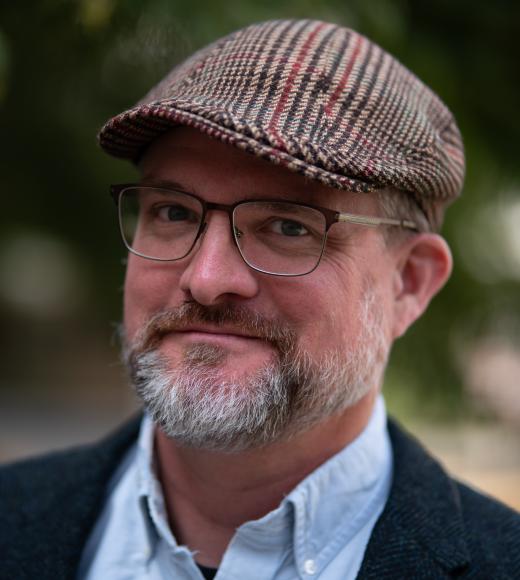
Position Title
Professor of Teaching
Interim Executive Director, The Writing Center
Biography:
B.A. Pitzer College
Ph.D. University of Wisconsin-Madison
My work focuses on intersections between aesthetics, politics, intellectual and literary and cultural history, especially as the first half of the twentieth century inflects our contemporary vision of representation and action. I'm particularly focused on the relationship between aesthetic judgment, political judgment, dictatorships, and democracies.
As a first-generation-to-college student myself, I'm proudly involved with the First-Generation Initiative. I once received the UC Davis Distinguished Teaching Award for Undergraduate Teaching.
Selected Publications:
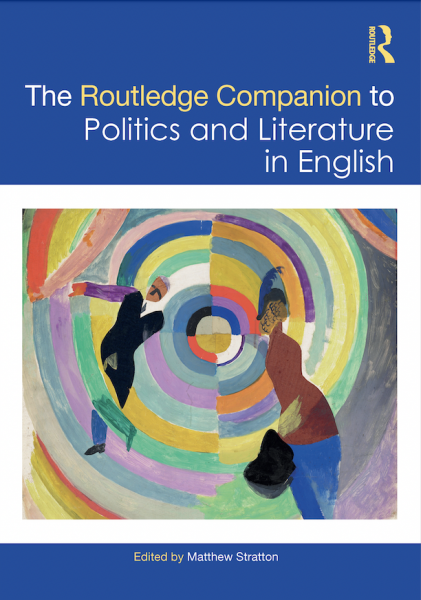
The Routledge Companion to Politics and Literature in English, (2023)
Some Articles:
- "Modernism, Personality, and the Racialized State." The Cambridge History of American Modernism. Cambridge University Press (2023).
- "Form, Norm, and Gender in the 1920s: Dorothy Parker and Anita Loos." Options for Teaching British and American Satire. Ed. Evan Davis and Nicholas D. Nace. New York: MLA, 2019.
- “Aesthetics and Politics in the Depression Era.” The Cambridge Companion to American Literature of the 1930s. Cambridge University Press, 2018. 36-54.
Old News:
The Politics of Irony in American Modernism. New York: Fordham University Press, 2014
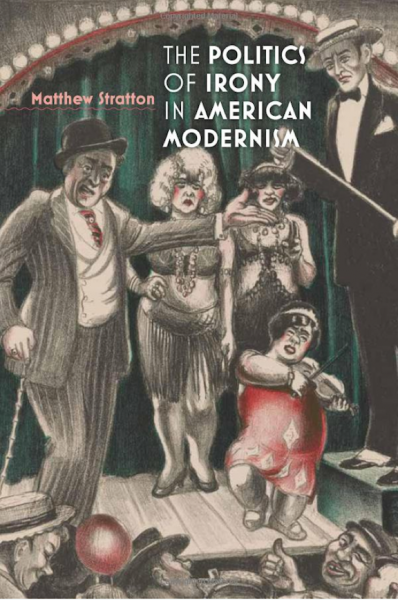
Shortlisted for 2015 MSA Book Prize, Modernist Studies Association
"Readers who like their scholarship to be ecumenical in its sourcing and counterintuitive in its findings will find much to admire in The Politics of Irony in American Modernism." - T. Austin Graham, American Literary History Online Review
"The Politics of Irony in American Modernism is a remarkable work of scholarship, wedding theoretical acuity with bold and lively readings across an impressive range of contexts. He not only offers us a bold new frame for reading modernism; he makes modernism itself richly new as an object of study. This work will shape conversations among scholars of modernism and its discontents for many years to come." —Sara Blair, University of Michigan
"An important and deeply insightful book. Moving past familiar debates on the politics of irony, Stratton argues for an understanding of modernist irony as an aesthetic practice that not only sharply reorients political perception, but also promotes dispositions and habits of analysis that are indispensable to political thought and action." —Amanda Anderson, Brown University